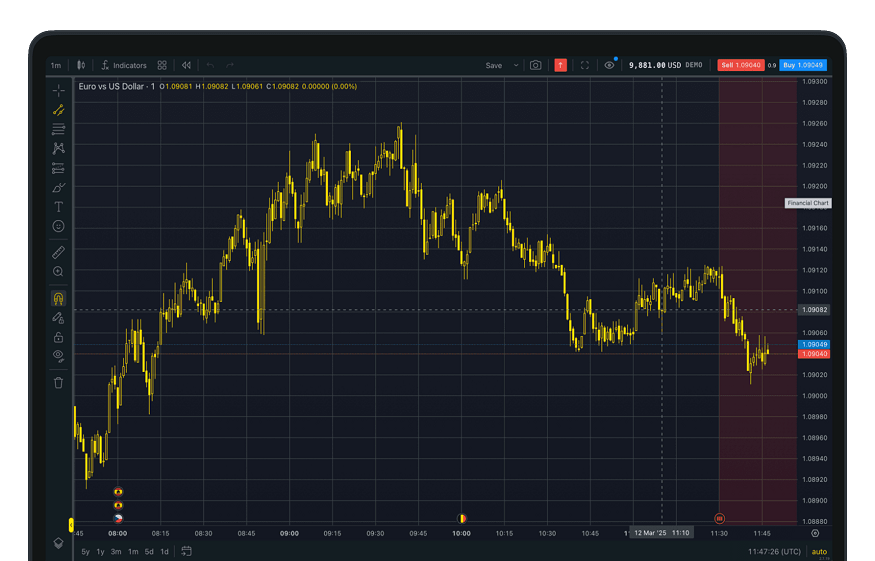

The Indian financial landscape has undergone a dramatic shift over the last decade, driven largely by two powerful innovations that have reshaped how retail investors participate in the stock market. The rise of the Trade API has given developers and institutions the power to build sophisticated trading infrastructure without starting from scratch, while the Trading APP has brought the stock market directly into the palms of millions of first-time investors across every corner of the country. Together, these technologies have democratised wealth creation and made financial markets more accessible than ever before for the common Indian investor.
The Digital Revolution in Indian Financial Markets
Not so long ago, investing within the Indian listed market became a privilege reserved for the wealthy or economically connected stockbrokers, working through smartphone calls, paper-based order slips, and physical visits to the trading floor. The technique has become incremental, expensive, and profoundly inaccessible to the average salaried expert or small business owner living outside of major metropolitan areas.
Today, that reality is completely reversed. Millions of demat loans are opened every month across India, with a significant portion coming from Tier II and Tier III cities. Young experts in their twenties are expected to start placing orders in stock markets, mutual funds and derivatives — all through the casual use of their smartphones. This change has not happened. Driven by planned technology investments and the rapid development of mobile-first financial systems specifically designed for the Indian consumer.
How Technology Bridges the Gap Between Markets and Investors
At the heart of this transformation is the infrastructure that enables instant booking, real-time price feeds and seamless portfolio monitoring. Modern brokerage platforms in India have invested closely in building robust re-end structures that link directly to the National Stock Exchange and Bombay Stock Exchange. These structures can float records in milliseconds, enabling investors to deal with market movements with precision that was previously impossible for institutional actors.
Read More: CFD Trading Strategies for Short-Term and Long-Term Gains
For retail investors, this suggests that they could now compete on a more level playing field. Whether someone is a swing trader checking price action every day or a long-term investor building a retirement portfolio through systematic funding plans, the technology available today supports all styles and methodologies with equal efficiency.
The Rise of Algorithmic and Automated Trading in India
One of the most significant developments in recent years has been the growing popularity of algorithmic trading among retail investors in India. What was once exclusively the domain of large hedge funds and institutional desks is now being adopted by individual traders who possess programming skills and market knowledge.
Platforms that offer open programmatic access to market data and order management systems have made it possible for independent developers and fintech startups to build customised trading strategies. These strategies can scan hundreds of stocks simultaneously, identify patterns, and execute orders automatically based on predefined conditions — all without human intervention during trading hours. This has allowed a new class of quantitative traders to emerge in India, who approach markets with data science rather than intuition alone.
Empowering the First-Time Investor Through Simplified Interfaces
While computerisation and algorithmic buying and selling are on the rise, most of India’s new-time traders are not coders or analysts. They are salaried people, home workers, students and small business owners who are discovering the storage market for the first time. For this demographic, simplicity is everything.
Read More: How to Decide What Stocks to Buy Today
Modern input systems are responding by creating interfaces that remove complexity without sacrificing functionality. Consuming a new one now takes minutes, not days. Know that your customer authentication is done digitally and in real time. Setting up funds is effortless, and investment options — from direct stocks to exchange-traded funds to government bonds — are provided in a lightweight, easy-to-navigate layout. Guided funding journeys and educational content in the app help investors build their financial life skills.
Data Security and Regulatory Compliance in the Indian Context
As more Indians entrust their savings to digital platforms, the responsibility of maintaining data security and regulatory compliance has never been greater. The Securities and Exchange Board of India continues to evolve its regulatory framework to keep pace with technological innovation, ensuring that both platforms and investors are protected.
Reputable platforms operating in the Indian market maintain stringent data encryption standards, two-factor authentication protocols, and regular security audits. Regulatory oversight ensures that investor funds are held in segregated accounts and that platform operators adhere to strict reporting requirements. This framework of accountability has been crucial in building the trust necessary for mass adoption of digital investing.
Looking Ahead: The Future of Digital Investing in India
The virtual investing revolution in India is still in its early chapters. With increasing smartphone penetration, enhanced internet infrastructure, and increasing economic focus among younger generations, the range of energetic retail shoppers is projected to multiply exponentially compared to previous years.
Innovations that include artificial intelligence-driven portfolio recommendations, voice-activated investments, and deeper integration with payment systems are already on the horizon. Platforms to lead this next wave of growth must be those that combine technological excellence with the unique needs of India’s many targets, combine the population and risk combine profiles.