Investing in the Gulf has never been isolated from global economic developments, but the pace of connection has changed dramatically. Investors in countries such as the United Arab Emirates, Saudi Arabia, Qatar, Kuwait, Bahrain, and Oman now have access to information, markets, financial products, and economic opportunities that extend far beyond their domestic exchanges. International developments can influence local portfolios almost instantly, making awareness and adaptability increasingly important.
This more connected environment is creating both opportunities and responsibilities. Investors are no longer simply deciding between local stocks, property, or traditional savings products. They are considering international equities, exchange-traded funds, currencies, commodities, fixed income, and other diversified assets while paying closer attention to global interest rates, technology, energy markets, and geopolitical developments. The result is a more sophisticated investment landscape in which informed decision-making matters as much as access.
Global Access Is Changing Investment Decisions
One of the most important changes for Gulf investors is the growing accessibility of international markets. Digital investment platforms and modern financial services have made it easier to research and gain exposure to companies and markets outside the region. An investor based in Dubai, for example, can follow developments in American technology companies, European industries, Asian markets, and global commodity prices without relying solely on local market information.
This wider access can help investors build portfolios around different economic drivers. Gulf markets remain closely associated with energy, infrastructure, financial services, real estate, and government-backed development initiatives, while international markets offer exposure to sectors such as healthcare, technology, consumer goods, and advanced manufacturing. Diversification does not eliminate risk, but the principles promoted by major financial institutions and investment professionals consistently emphasise the value of avoiding excessive dependence on a single asset, sector, or market.
Greater access also means greater responsibility. International investing introduces considerations that may be less significant when investing domestically, including currency movements, foreign taxation, market regulations, liquidity, and differences in economic cycles. Investors therefore need to look beyond headline returns and understand how an overseas asset fits within their broader financial circumstances. A globally connected portfolio can be useful, but only when the investor understands the risks attached to that connection.
Technology Is Making Information More Immediate
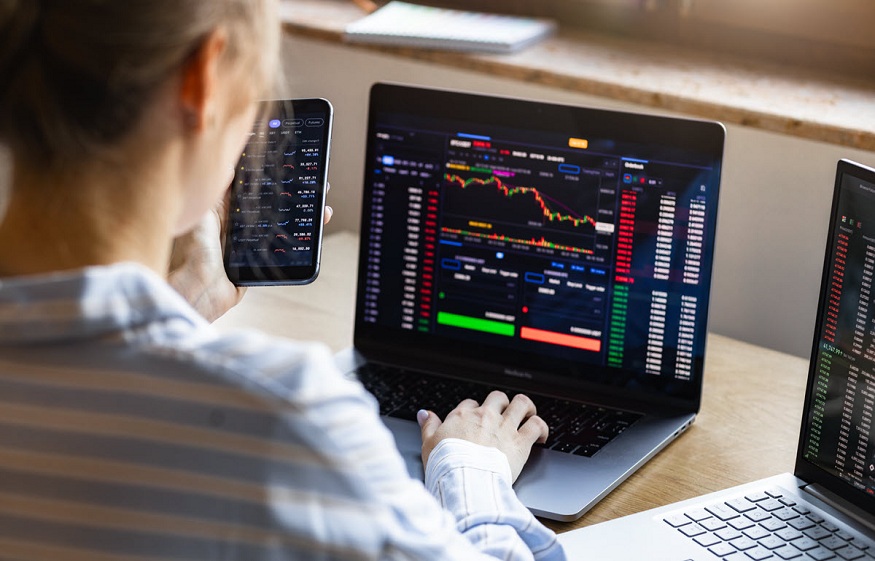
Technology has changed not only where Gulf investors can invest, but also how they make decisions. Financial news, company reports, market data, economic announcements, and research are available almost instantly through digital platforms. This has reduced some of the traditional barriers to market participation, allowing individual investors to monitor developments that once required specialist access or professional intermediaries.
Read More: How F&I Managers Can Build Trust Before Presenting Products
However, faster information does not necessarily mean better decisions. The constant flow of headlines can encourage investors to react emotionally to short-term market movements. Central banks, governments, and established financial institutions frequently stress the importance of distinguishing meaningful economic changes from temporary market noise. A disciplined investor may therefore use technology to improve research and monitoring while still relying on a long-term strategy rather than making decisions based on every market fluctuation.
For investors looking to understand the broader opportunities available through international markets, it can be useful to find out more about different asset classes, investment approaches, and the factors influencing global financial conditions. The objective should not be to follow every new trend, but to develop a stronger understanding of how individual investments behave and how they could interact with existing holdings.
Diversification Is Becoming More Sophisticated
Diversification has long been relevant to Gulf investors, but a connected financial environment has expanded what diversification can mean. Rather than simply holding several companies in the same domestic market, investors may consider a combination of regions, industries, currencies, and asset classes. This approach can provide exposure to different sources of potential growth while reducing dependence on one particular economic outcome.
For example, an investor might combine regional equities with international funds, fixed-income investments, cash reserves, or other suitable assets. The appropriate balance depends on factors such as investment horizon, income, liquidity requirements, risk tolerance, and financial objectives. Professional investment frameworks generally emphasise that asset allocation should be tailored to an investor’s circumstances rather than built around whichever market happens to be performing strongly at the time.
Gulf investors are also increasingly paying attention to currency exposure. Many international investments are denominated in currencies other than the investor’s home currency, meaning exchange-rate movements can influence the final return. This does not automatically make foreign investments unsuitable, but it highlights why investors should understand the relationship between currency risk and portfolio performance. Looking at returns in isolation can provide an incomplete picture when assets are held across multiple currencies.
Conclusion
Gulf investors are operating in a financial environment where local and international markets are increasingly intertwined. Greater access to global investments, faster information, and broader diversification opportunities can help investors build more resilient portfolios, provided these advantages are approached thoughtfully. The strongest strategies are unlikely to come from simply following whichever market is attracting the most attention.
Read More: The Current Needs of Advanced Aerospace Material Production
Instead, investors can benefit from combining regional understanding with global awareness. By staying informed, diversifying carefully, evaluating currency and market risks, and aligning investment choices with personal objectives, Gulf investors can adapt to a more connected financial world without losing sight of the fundamentals.